Why this post is in English
I’m practicing my English by talking with ChatGPT while I drive to work. I say something, and ChatGPT corrects my sentences.
This morning it was raining. The traffic was slow, but I think it was fine. I started to tell ChatGPT what happened yesterday, and we discussed it for about one hour. So I decided to write it down as a blog post, in English, as part of my practice.
My English is not perfect. I kept my own sentences as much as possible, and only fixed the grammar.
What happened
My OpenClaw system on Tencent Cloud Server was working well. But I worried it was too old. So I used Pocket Claw, a third-party application on my iPhone, to upgrade it.
After the upgrade, the Lighthouse Agent on the Tencent Cloud website stopped working, although Pocket Claw was still okay.
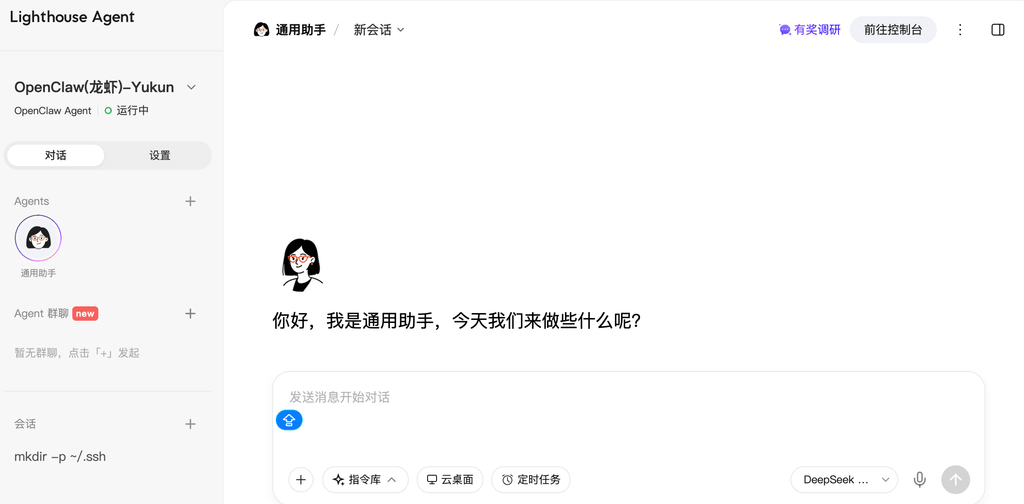
Then I spent two or three hours to fix it. I tried three different AI tools.
Phase 1: The AI didn’t look so smart
First, I used the AI assistant on the Tencent Cloud website, and I discussed a lot with it. But the AI didn’t look so smart. It went step by step, in detail, and I only needed to click “approve”. I didn’t know the details.
It modified lots of documents, for example, where the new OpenClaw is. It spent lots of time, but it didn’t solve the problem. So I moved to a different tool.
Phase 2: Pocket Claw, only for analysis
Second, I went to Pocket Claw on my iPhone, because it can access my OpenClaw system. I asked Pocket Claw to analyze the possible reasons and how to solve the problem.
But I mainly used Pocket Claw to analyze the status and possible solutions. I didn’t let it run the solution. Pocket Claw is a third-party application, and I was worried about safety and new bugs.
Phase 3: Question clarification
Third, I used the OrcaTerm terminal on the Tencent Cloud website. It is similar to Claude Code: I can discuss with the AI in natural language.
This third AI tool looked much smarter than the first one, even though both are from the same website. But I think the most important thing was the question clarification.
I told the AI everything I did before the system failed:
- In the beginning, the system was okay, but I worried OpenClaw was too old.
- I used Pocket Claw, a third-party application, to upgrade it.
- Then the Lighthouse Agent failed.
- I used the AI tool in phase 1 to fix it. It modified lots of documents, like where the new OpenClaw is, but it didn’t solve the problem.
Based on all this, we finally discussed a direction: maybe I should still use the old OpenClaw and upgrade it in the same folder, not use the new OpenClaw in another folder created by Pocket Claw.
The AI helped me change back the modifications. Then the system worked, and the Lighthouse Agent worked again.
What I learned
1. I’m not an IT engineer, but AI can help me
I work in product development in the chemistry industry. I’m not an IT engineer, and I don’t know the code of OpenClaw. But the AI assistant can help me check the possible reasons. I shared my operations on the server, it checked the details, we discussed possible solutions together, and it solved the problem with my guidance.
Actually, I don’t know the details of the process. But I can check whether the website is working or not. So I know whether the solution works.
As a non-IT engineer, AI can help me quickly understand the possible reason, how to fix it, and how to check whether the solution works.
2. Question clarification is the most important
The third tool looked smarter. But I think the most important thing was not only the tool. It was the question clarification: I told the AI all the status and all the operations, step by step.
3. If it ain’t broke, don’t fix it
I regret upgrading OpenClaw, because it cost me two or three hours to fix it.
There is an old saying: if it ain’t broke, don’t fix it. I had forgotten it.
4. Find some benefits from the two or three hours
This problem should not have been a problem. If I didn’t upgrade, I could use the two or three hours for other things.
But now I need to say: at least I practiced problem-solving with AI tools.
AI and junior engineers
There is some news about AI: in lots of companies, there are fewer opportunities for junior engineers, because most of the basic tasks have been replaced by AI. Some people worry that students who graduate from university cannot get the practice opportunities to learn and improve their skills.
This experience gave me another thought. Even if AI takes some learning and training opportunities from junior engineers, we as people can still create mistakes, play with AI tools, Pocket Claw, our personal computers or websites, and use AI to solve them. That’s what I did. It became a self-learning opportunity.
The ending
So yes, I broke my working system, spent two or three hours fixing it, and gave myself a training session.
Even if AI takes away some training opportunities from junior engineers, we can still create our own, even if we have to break something first.
Next time, though, I might try learning something without breaking anything first.
This post came from my one-hour English practice with ChatGPT while driving. The ideas and most sentences are mine. ChatGPT and Claude helped me organize them and fix the grammar.